
The Confederation of Indian Industry (CII) has proposed a 20-point policy agenda to the finance ministry, including a conflict-linked emergency credit line guarantee scheme and tax rationalisation on energy inputs, to support MSMEs, exporters, and energy-intensive industries affected by the ongoing West Asia war.

The Union Cabinet on Wednesday approved additional funding of up to Rs 3 lakh crore at a concessional rate of 9.25 per cent through the Emergency Credit Line Guarantee Scheme (ECLGS) for the MSME sector hit hard by the coronavirus crisis. The ECLGS was the second-biggest component of Rs 21 lakh crore comprehensive package announced by Finance Minister Nirmala Sitharaman last week.

Commercial banks in India recorded their highest credit growth in two years, accelerating to 18.6 per cent year-on-year by June 27, while also mobilising nearly 7 trillion in deposits, marking the third-highest fortnightly deposit growth in 29 years.

The government on Thursday said it has extended the Emergency Credit Line Guarantee Scheme (ECLGS) to the health sector and 26 other sectors identified by the Kamath Committee. The National Credit Guarantee Trustee Company Limited (NCGTC) has issued the operational guidelines for implementation of ECLGS 2.0 scheme, the finance ministry said in a statement. The scheme was announced by the government earlier this month as part of the Rs 2.65 lakh crore Atmanirbhar Bharat 3.0 package.

India's public sector banks (PSBs) have seen their net profit nearly treble over the past five years, reaching a record Rs 1.98 trillion in FY26, driven by significant improvements in asset quality and sustained lending growth across key economic sectors.

State Bank of India Chairman C S Setty has expressed support for a 'pause' in policy rates by the Reserve Bank of India's monetary policy committee, believing it will help stabilise conditions and support economic growth. He also urged investors to look beyond short-term equity market movements and focus on India's structural transformation, driven by reforms and digital infrastructure.

Non-banking financial companies (NBFCs) reported encouraging results for Q4FY26 with improved asset quality and earnings, but analysts maintain a cautious near-term outlook due to geopolitical tensions, monsoon risks, and specific portfolio concerns.

According to highly placed sources, the finance ministry is likely to extend ECLGS and other loan guarantee schemes for micro, small and medium enterprises (MSMEs), hospitality and tourism sector, and the health infrastructure beyond March 31, Business Standard has learnt. This is likely to be announced by Finance Minister Nirmala Sitharaman as part of her Budget speech on February 1.

The scheme is the biggest fiscal component of the Rs 20-lakh crore Aatmanirbhar Bharat Abhiyan package announced by Finance Minister Nirmala Sitharaman last month.

The conflict may disrupt Budget 2026-2027 projections, squeezing revenues and raising subsidies, prompting fiscal adjustments and potential reforms, echoing lessons from the Covid-era shock, points out A K Bhattacharya.

The additional amount will be exclusively earmarked for the hospitality and related segments to help them recover to pre-pandemic levels. Presenting the Budget 2022-23 in Parliament, the finance minister said the Credit Guarantee Trust for Micro and Small Enterprises (CGTMSE) scheme will be revamped with required infusion of funds.

Finance Minister Nirmala Sitharaman on Tuesday held a review meeting on credit guarantee scheme with heads of public sector banks, and asked them to expedite loan disbursement under the Rs 3-lakh crore ECLGS for MSME sector, hit hard by coronavirus-induced lockdown. The meeting on Emergency Credit Line Guarantee Scheme (ECLGS) was held through video conference, and the minister appreciated the efforts of banks in execution of the scheme.

The finance minister chaired a meeting through video conference with major private banks and NBFCs to ensure effective rollout of ECLGS and uninterrupted liquidity to Indian MSMEs in this difficult time.

'1991 was an exceptional period in Indian history.' 'A big 400-volt shock was administered to the system, which was required. Today, we are in a much, much better position.'

Central Bank of India classified its loans to Go First as non-performing assets (NPAs) in the July-September quarter (second quarter, or Q2) of 2023-24 (FY24). The no-frills carrier has been under insolvency proceedings since May 2023 and ceased operating flights on May 3 this year. The public sector lender's exposure, including government-guaranteed emergency credit to the ailing airline, amounts to about Rs 2,000 crore.

Sitharaman said the government wants to sell stake in public sector companies at a time when it fetches the right price.

On August 7, the US president announced doubling tariffs on Indian goods to 50 percent for India's purchases of Russian crude oil, but gave a 21-day window to negotiate an agreement.

Of the total cash outgo Rs 40,000 crore is towards enhanced expenditure under Mahatma Gandhi National Rural Employment Guarantee Program and Rs 33,771.48 crore have been sought for direct benefit transfer under Pradhan Mantri Jan Dhan Yojana and National Social Assistance Programme.
The USA's steep 50 per cent tariffs on Indian goods entering America will severely impact exports and job creation in labour-intensive export sectors such as shrimp, apparel, leather and gems and jewellery. Exporters said that the imposition of a 25 per cent penalty on India over and above the 25 per cent tariffs move will disrupt the flow of Indian goods to its largest export market.

Non-banking finance companies face renewed asset quality and liquidity risks amid a second wave of COVID-19, Fitch Ratings said on Thursday. These challenges are likely to increase if recent restrictions to contain the pandemic are expanded or prolonged, leading to greater economic and operational disruption, it added. The rating agency further said that an increase in the rate of infections and broadening of social distancing restrictions pose downside risks to its 12.8 per cent growth projection for the current fiscal.

Bank credit is likely to grow at a four-year high of 11-12 per cent in fiscal 2023, on the back of better economic growth and budgetary support from the government, according to a report. In the fiscal ended March 2022, bank advances have likely grown at 9-10 per cent. "Healthy economic growth and budgetary support from the government should lift bank credit growth by 200-300 basis points to 11-12 per cent this fiscal," Crisil Ratings said in the report. The higher credit growth expectation is also supported by the improved resilience of the banking system, it added.

The textile and apparel sector is India's second-largest employment provider, after agriculture, and it is now caught in a wave of uncertainty following the Donald Trump administration's tariff policy.
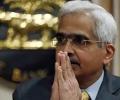
Reserve Bank Governor Shaktikanta Das will hold a meeting with CEOs of public sector banks on Wednesday to discuss issues concerning slow deposit growth and sustainability of high credit demand. As per the Reserve Bank of India (RBI) data, deposits rose by 9.6 per cent as compared to 10.2 per cent on a year-on-year basis, while credit offtake witnessed a jump of 17.9 per cent as against 6.5 per cent a year ago. According to an agenda circulated for the meeting, sources said, sustainability, including pricing and slow growth of deposits, would be discussed.

S&P Global Ratings on Wednesday said Indian banks face a systemic risk as the second COVID wave will impair the performance of financial institutions in the April-September period. Stating that economic recovery remains highly vulnerable to setbacks due to COVID, particularly if fresh outbreaks trigger new lockdowns, S&P said the banking sector's weak loans will likely remain elevated at 11-12 per cent of gross loans in the next 12 to 18 months. "The second wave has front-ended weakness in asset quality," said S&P Global Ratings Credit Analyst Deepali Seth Chhabria. "Financial institutions face a strained first half amid weak collections and poor disbursements."

To help revive the economy battered by COVID-19, Finance Minister Nirmala Sitharaman on Monday announced a slew of measures, including Rs 1.1 lakh crore credit guarantee scheme for improving health infrastructure, and enhancing the limit under the ECLGS by 50 per cent to Rs 4.5 lakh crore for the MSME sector facing liquidity crunch. Sharing the details of stimulus package, the finance minister said this comprises eight relief measures and other eight measures to support the economic growth. She announced Rs 1.1 lakh crore loan guarantee scheme for COVID-affected sectors, including health sector, which includes guarantee cover for expansion or for new projects. Besides, she said, additional Rs 1.5 lakh crore limit enhancement done for Emergency Credit Line Guarantee Scheme (ECLGS) scheme.


Banks are in the process of getting a board-approved restructuring framework in line with the RBI's framework and eligibility defined by the central bank.

Crisis-hit SpiceJet plans to hand out pink slips to at least 1,000 employees in the coming days as the airline works to significantly reduce costs and streamline operations of its depleted aircraft fleet, officials said on Monday. Faced with financial woes, legal battles and other headwinds, the no-frills carrier might ask more staff to leave as there is excess manpower now compared to the number of planes in service. A final decision on the quantum of layoffs is expected this week, one of the officials in the know said.

Personal loans have about 80 per cent share in exposures restructured under regulatory package 2.0 by eight banks who have declared results for the second quarter. The remaining 20 per cent are loans to individuals used for business and credit to MSMEs. The total recast exposure of these banks under One Time Restructuring (OTR 2.0) was Rs 27,708 crore.

The finance minister has emphasised on the quick disbursal of additional loans to MSMEs, to simplify process, formats and documentation.

Reserve Bank Governor Shaktikanta Das on Thursday said the central bank's asset purchases, aimed at mitigating COVID-19-related liquidity stress in the system, did not dilute its balance sheet or compromise on core principles of central banking. In the wake of the pandemic, the RBI undertook several conventional and unconventional measures. "Unlike many central banks, the RBI's asset purchases did not dilute its balance sheet and hence, did not compromise on core principles of central banking," Das said while addressing an event organised by the Bombay Chamber of Commerce. These purchases were confined to risk-free sovereign (government) bonds including state government securities only, he said.

Experts attribute the lower target to increased allocation under the credit guarantee scheme for small businesses. Out of the Rs 3.21 trillion worth loans sanctioned under the Pradhan Mantri Mudra Yojana (PMMY) in the last financial year, Rs 3.12 trillion were disbursed to entrepreneurs, according to official data.

Bank of Baroda (BoB) has made prudential provision of Rs 500 crore for exposure to Go First, which has sought bankruptcy protection after the National Company Law Tribunal (NCLT) admitted its plea for voluntary insolvency. Sanjiv Chadha, managing director and chief executive officer of BoB, said the bank identifies issues in advance and makes provisions if required. The Mumbai-based public sector lender has an exposure of Rs 1,300 crore to the troubled airline.

'There is no immediate threat to the government, and they would prefer the growth agenda.'

Banks' bad loans might cross Rs 10 lakh crore by the end of this fiscal, mainly on account of slippages in retail and MSME sectors, a study said on Tuesday. "NPAs are expected to rise to 8.5-9 per cent by March 2022, driven by slippages in retail, Micro, Small and Medium Enterprise (MSME) accounts, besides some restructured assets," the study by industry body Assocham and ratings firm Crisil said. The study titled 'Reinforcing the Code' said the Gross Non-Performing Assets (GNPAs) of banks are expected to cross Rs 10 lakh crore by March 2022.

The Indian economy requires a Rs 3 lakh crore fiscal stimulus, including cash transfer to households through Jan Dhan accounts to spur economic growth amid the pandemic, industry chamber CII said on Thursday and pitched for appointment of a 'Vaccine Czar' for speedy vaccination coverage. CII president T V Narendran also said the chamber expects GDP to grow at 9.5 per cent in 2021-22 as the strong growth in the second half of the fiscal year will be supported by robust external demand and large-scale coverage of vaccination, allowing resumption of economic activity. He also advocated for appointment of a "Vaccine Czar" for speedy vaccination coverage.

Finance Minister Nirmala Sitharaman is scheduled to meet heads of public sector banks (PSBs) next week to review performance of the lenders and progress made by them to support the economy battered by the COVID-19 pandemic. Banks would be urged to sanction loans for productive sectors to accelerate revival of the economy, sources said. According to sources, the two-day meeting would commence on November 17 and undertake a comprehensive review of various segments, progress in government schemes including Aatmanirbhar Bharat Abhiyan.

Akasa Air, which took to the skies two months ago, will allow domesticated dogs and cats in cabin as well as cargo from November and will also be starting new routes in the coming weeks. The airline, which is "well capitalised", plans to start international services in the second half of 2023 once it has a fleet of 20 planes. Currently, the carrier has 6 aircraft and will have a total of 18 planes by the end of March next year.

In a bid to support revival of sectors hit most by the Covid-19 pandemic, Reserve Bank of India on Friday decided to open a separate liquidity window of Rs 15,000 crore for certain contact-intensive sectors like hotels and restaurants, tourism and aviation ancillary services.

House economists at the nation's largest lender State Bank of India (SBI) have urged the government to budget for nursing the pandemic-ravaged economy and not to focus too much on fiscal consolidation as there is a need for more stabilisation measures to sustain the fledgling recovery. And one of the best way to begin the new fiscal is to complete the share sale of LIC this fiscal. This can go a long way in repairing the overstretched balance sheet which in turn will bring down fiscal deficit to a much lower 6.3 per cent in FY23 as the public coffers will be left with a cash surplus of at least Rs 3 lakh crore to begin the new fiscal, SBI chief economist Soumya Kanti Ghosh said in a pre-Budget note on Wednesday.
